Tuesday, May 25, 2010

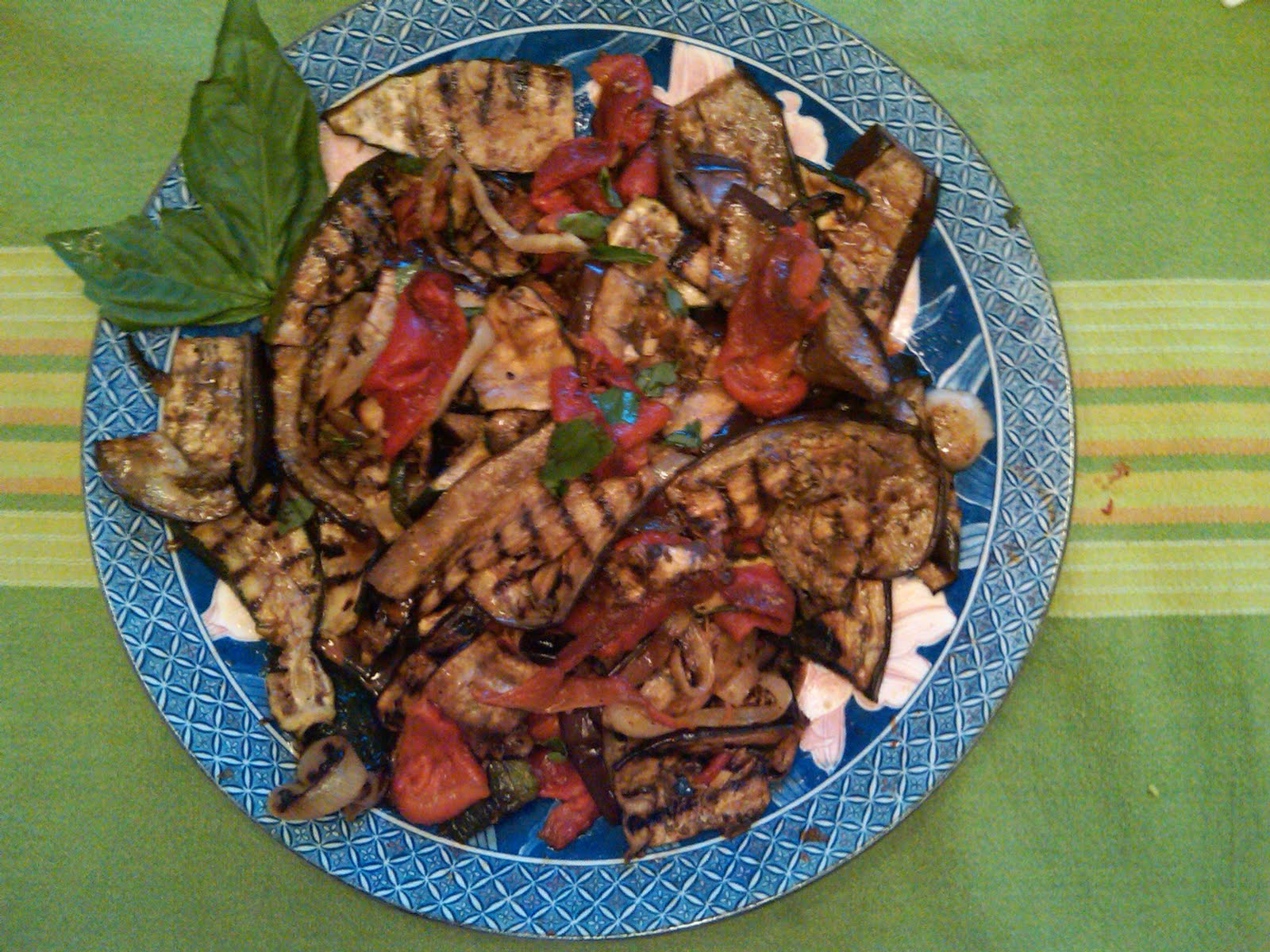
Peperonata


Once upon a time before I was married I travelled to France and had my first culinary experience with Ratatouille. I loved it, it was a perfect lunch served at room temperature in the heat of Nice, but I had no idea then that I would be making it for the rest of my life! That is because the same dish in Italy is known as Peperonata, and it was a mainstay of Adriana's kitchen, particularly as the summer morphed into fall and the vegetables became overly plentiful. Put another way, what do you do with all those zucchini? We have always grown our own vegetables, although eggplant proves very difficult (read impossible) to produce in this distinctly non-mediteranean climate. I do make this dish all year round, though, and if I don't have the ingredients in the garden, I purchase them. This is a vegetarian stew, easy to make and delicious served hot or at room temperature, as a main or as a side.
Goes well with fish or chicken, summer grills or winter dishes.
Peperonata
Assemble the vegetables. Adriana used whatever she had, as follows:
Peppers, any colour or mixed. (Hence the name--Peperonata.)
Onions, 1 or 2 big ones.
Zucchini (unpeeled).
Eggplant (unpeeled).
Tomatoes, 3 or 4 (or 1 large tin Italian peeled Plum tomatoes with juice.)
Get a good handful of Basil, some Parsley, and a few cloves of garlic.
Now stop and admire the beauty of these--the eggplant with their shiny purple skins, the green zucchini, the orange-red tomatoes. Gorgeous! Maybe you should paint them instead of cooking them. Oh, sorry. Just an aside.
Get out a good-sized heavy pot with a lid.
Chop up all the vegetables, not too small, maybe about 2 in. chunks.
Put a drizzle of oil in the bottom of the pot and add the vegetables, the raw ones first,including chopped garlic, as much as you like. Cook and stir a bit and add the canned tomatoes if using. (You might have enough ripe fresh tomatoes.) Add some chopped Basil,and parsley if you like.
Cook and stir until the veggies are soft, and salt to taste.
Adriana cooked this in a cast-iron pot on a wood stove which I swear imparts a special flavour I have never been able to replicate. She would cook the Peperonata until the vegetables were pretty much indistinguishable.
I cook it a bit less than that, and you should take it off the heat when it looks and tastes the way you want it to.
Serve it hot or at room temperature. Adriana always topped it with a good handful of grated Montasio (or Parmigiano), which looks and tastes wonderful and may be the only thing distinguishing this from Ratatouille.
Garnish the serving dish with more Basil.
This is great taken for a picnic, too. Travels well.

Thursday, May 6, 2010

Calamari Salad


Here's a colourful cold salad that makes a great antipasto all year round, or a lunch or side dish. Years ago, after sampling fried Calamari for the first time in a fishing village in Italy, I knew I was going to have to learn to clean them myself when I returned to Canada. An Italian friend was more than happy to show me how, and I think of Antonietta every time I do this job. It's not difficult, but it takes time.
I'm happy to report that I have now found a source of already cleaned squid, which makes the whole process, whether you're frying them or making this cold salad, a cinch!
I hope you, too, can be so lucky.
Again, I cannot give you amounts. Use as much calamari as you think you'll need for the number you're serving, and whether or not you're serving this as a main dish at lunch or as an antipasto. It looks great on a buffet, and leftovers taste even better the next day.

Calamari Salad
Cut the cleaned squid into rings about 1/2 inch wide. If there are tentacles, leave them whole. When a pot of salted water has come to the boil, drop in the cut-up calamari and leave them in for no more than 30 seconds, then remove to a plate or bowl with a slotted spoon. Leave them to cool.
While they're cooling, mince a clove or two of garlic and a shallot or two. Put these into the bottom of the bowl or dish in which you will be serving the salad. Now cut up and add a ripe tomato or two, a sweet red pepper (raw), a bunch of parsley and several leaves of basil.(Some recipes call for black olives and scallions or a red onion finely diced.) Now add the cooled calamari and toss together. Add the juice of one lemon and a squirt of red wine vinegar. Add some good olive oil and salt to taste. Some of you will want to add cilantro instead of parsley. Go ahead.
Give it all a good stir and taste. Adjust the salt, vinegar, lemon juice etc. to suit your palate. Remember that it will be much more flavourful once it has had time to sit, at room temperature, so that the flavours can blend before you serve it.
Buon Appetito!

Tuesday, April 27, 2010

Grilled Eggplant Salad


Mixed Grilled Vegetable Salad
(Eggplant in Italian is Melansane.)

This is so beautiful on the serving platter, and absolutely delicious.
The fastest way to prepare the vegetables is on the barbeque, but failing that option, use a grill pan on the stove, one that will leave "grill" marks on the veg's.

I won't tell you how many of each type of vegetable to use, the choice is yours, depending on what is available, what you like, and how many you're serving. The last time I did this, 2 days ago, I used two med. eggplants, 3 zucchini, 1 lg. red onion (white is fine), and one bag of my frozen roasted red peppers. (Defrost and reserve the juice.) This made a good amount.
Finely dice garlic, 1 to 3 cloves depending on how much you and your family like it.
Tear some fresh basil and leave a few leaves whole for garnish and/or chop some parsley. We love the addition of the basil.

Heat the barbeque or the grill pan, wipe the veg's with a damp cloth.
Brush (or spray, that's what I do, using cooking spray) one side only of sliced eggplant, just enough to cover the surface of the grill. (If you slice it too much in advance it will turn brown). Slice the eggplant vertically, throwing away the two outside slices with the skin, which is tough, but don't peel it otherwise. Grill until it has nice marks, about 5 minutes per side.
The zucchini doesn't need to be peeled, slice it vertically as well.
Grill all the vegetables you're using, placing them on a platter or dish as you go.
Salt and sprinkle the layers with garlic as you go.
When all the vegetables are grilled,add the chopped parsley or torn basil (or both) and drizzle the dish with red wine vinegar and some of the reserved red pepper juice. Add more salt and/or vinegar to taste. Of course some of you will want to drizzle it with good olive oil. Go ahead. Now garnish with whole basil leaves.

This is a beautiful side dish, good with barbequed or roasted meat, fish or chicken.
Sometimes you could scatter bits of feta or goat cheese over it and call it lunch!

This is a keeper!

Roasted Red Peppers


Now that you have a supply of roasted red peppers, here are some ideas for serving them.
I often serve a dish of dressed roasted red peppers as an accompaniment for chicken, meat, or fish. Here's what I do. Defrost a bag of the peppers. Reserve the juice.
Cut the peppers into strips or rectangles and put into a dish. Add some of the juice.
Chop some parsley and a clove or two of finely-minced garlic and add these to the peppers.
Add salt and pepper to taste. Mix well.
Drizzle lightly with the oil of your choice and then with red wine vinegar.
Taste and adjust seasonings.
If you'd like to cut down on the oil, use the pepper juice instead and be liberal with the vinegar.

These are also great in a sandwich or on an antipasto platter along with marinated artichoke hearts, olives, quartered hard-boiled eggs, and maybe some sliced cheese and/or prosciutto, artfully arranged. Your imagination is the limit.

About Red Peppers


Red Peppers are about as beautiful as anything in nature, I think, and are delicious and nutritious as well. I'm sure you use them raw in salads or toss them into stir-fries. Of course they grew in abundance in Adriana's kitchen garden, along with green and yellow, but here on the west coast of Canada I have to buy them. But red peppers are plentiful in the stores in the Fall and the price is reasonable, so for many years now we purchase one or two cases so that we can roast them in bulk and then freeze them for use during the winter months. How often have you come across a recipe that sounds great but calls for one or two roasted red peppers, and having attempted to roast peppers in the past and scorched your fingers, have abandoned the idea? Despair no more. Here's what you can do so that you always have a supply at hand.

Roasted Red Peppers
First, purchase a case or two of red peppers, and wash them.
Now put on a jacket (if you're in Canada in the Fall) and start the barbeque.
Pour a glass of Prosecco (or whichever wine you like) and find a pair of tongs.
Get out your biggest soup pot with a tight-fitting lid and put it nearby.
Cover the surface of the grill (when its good and hot) with a single layer of red peppers.
Sit in a lawnchair close to the wine, tongs in hand, and turn the peppers until they're blackened on all sides.
As each one blackens put it into the soup pot and put the lid back on. Keep adding peppers to the grill until you've done them all.
Put the pot on the kitchen counter to be dealt with the next day. (Put it in the frig if you live in a hot climate.)
By the time you're ready to deal with them, the hot peppers will have steamed in the pot, finishing the cooking process, and the skins will have started to lift off while the syrupy pepper juice will have collected in the bottom of the pot. They'll be nice and cool and easy to handle.
Peel the peppers, putting them into a bowl and discarding the peels and the seeds and membranes that you scrape out. Do not discard the juice!

Using zip-lock freezer bags, portion out the peppers in the amount you think will be the handiest. Then portion out the juice, pouring some into each bag of peppers.
Seal and freeze.
These are absolutely delicious and require very little time to defrost in a bowl on the kitchen counter when you need them.

Saturday, April 17, 2010

Curried Chicken Salad


Although this is a recipe I did not learn from Adriana it is never- theless delicious and very handy to have in your repertoire. I think I invented it, and I like to think that Adriana would have served it had she known about it. She was very forward-thinking and open to new ideas. I remember her on quiet Sunday afternoons poring over the recipe section of the "Famiglia Cristiana" magazine which had just arrived, and she did serve "new" things to her family periodically.

Curried Chicken Salad
Use as many chicken breasts as you think you'll need, depending on how many you're feeding.
Poach these until done in water which you've flavoured with some onion, some celery leaves, salt and a Bay leaf. (That is, cook these together in water for a bit before poaching the chicken.)
Remove the chicken and let it cool. You may reserve the poaching liquid for another time, it's a lovely broth.
In the meantime, mix some store-bought mayonnaise with lemon juice and curry powder to taste.
Cut the chicken into dice, not too neatly and not too small.
Cut some green grapes in half, a little fewer than the volume of chicken.
Chop some celery, including leaves.
Mix all ingredients together. Taste and adjust seasonings. You may want to add salt.
This looks really pretty, and if you've used low-fat mayo, it's good for you too!

One of these times I'll tell you about Adriana's "Russian Salad", though why she called it that I don't know. And then there's "Potato Salad alla Russa". I daresay we have the "Famiglia Cristiana" magazine to thank for both these ideas.

Saturday, April 10, 2010

The Friulano Language


We've just had a visit of several days from old friends who no longer live nearby, and who hail originally from the mountains of Friuli, near San Daniele, where the famous Prosciutto is made. They are actually from Spilimbergo, an ancient city famed for its mosaics. There are many beautiful old buildings up there, churches, a seminary, and municipal buildings, which contain breathtaking examples of both ancient and contemporary mosaic work, and there is now a renowned school where the art of making mosaics is taught. Go, if you can!
I have been enjoying the wonderful sounds of the Friulano language these past few days and while I understand almost everything, I still have difficulty speaking it and there is no one here other than my husband who does.
In all of Italy there are only two provinces which have a separate, written language besides Italian. They are Sardinia, where Sardinian is spoken, and Friuli Venezia Giulia, where Friulano is spoken. Everyone also speaks pure, unadulterated non-dialect Italian (Dante's Italian) and are proud to also be keeping their unique language alive. Imagine my surprise when I first went to my new husband's home, Italian-English dictionary in hand, and found that it helped me NOT AT ALL. His family, needless to say, spoke Friulano among themselves. I was mystified as to why, though frantically paging through, I could not find any of these strange words in my dictionary.
It wasn't until the second or third day that my mother-in-law, the wonderful Adriana after whom this blog is named, finally pulled me aside and in impeccable Italian (I knew it was because I had gone to night school in preparation for this trip!), she explained to me about the Friulano language. Bless her!
Now, I have books of poetry and prose in Friulano, and my husband regularly receives a newspaper from Udine (the capital city of the province of Friuli) which is partly in Friulano and partly in Italian. It is called "Friuli nel Mondo".
And what does this have to do with food? Well, I'll tell you. We tried our darndest to offer our guests the old dishes they would have grown up with, and they were, I think, pleasantly surprised.
We had Musetto, Brovada, Tripe, Salsicca, Prosciutto, and Polenta. Not all at the same time, but spread out over two days. Our cholesterol level is likely sky-high and we'll have to go heavy on the salads for a while now, but it was worth it! Great fun to surprise them, my being Canadian.
I don't have the strength just now to elaborate on that old-style Friulano food, I need to lie down, but I will soon give you some recipes. And if you are someone who has any connection to Friuli, you might want to know how to make these things.
Or maybe, like me, its just fun to read about them.
Mandy! (That's Friulano for Ciao, or Bye-bye, or Toodle-oo.)